The Impact of China’s Digital Security Model in Ecuador
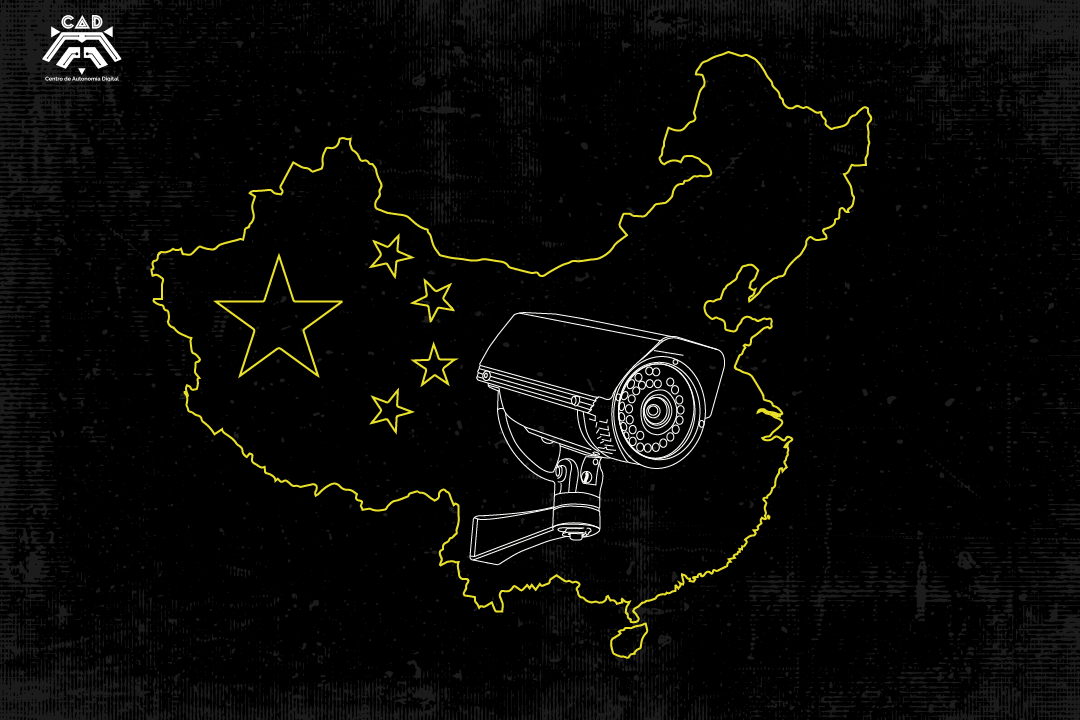
Over the past decade, Ecuador incorporated into its state infrastructure one of the most extensive surveillance systems in Latin America. What began as a project to modernize emergency response ultimately became a process of technological, financial, and operational dependency on the People’s Republic of China. ECU-911 not only reshaped the relationship between the state and its citizens; it also introduced a model of digital governance based on centralization, opacity, and control over information.
A System Born from Structural Dependency
The deployment of Chinese technology in Ecuador was made possible by a combination of internal financial crisis and conditional external financing. After the 2008 default, the country was shut out of traditional markets, and Chinese banks filled that gap with loans directly tied to Chinese state-owned suppliers. This meant that the selection of technological architecture was not an open process, but rather a bundled package combining debt, infrastructure, and strategic alignment.
ECU-911 was financed through a $240 million loan backed by oil export commitments. This structure tied the country to suppliers such as CEIEC and Huawei, leaving little room for diversification or independent auditing of acquired systems. The result was a technological ecosystem with closed protocols, conditional maintenance, and limited capacity to operate without foreign provider intervention.
Centralization of Surveillance and Its Implications
The official goal of ECU-911 was to unify all response entities under a single platform. While this integration improved coordination during emergencies, it also created an unprecedented system of mass monitoring in the country’s history. By 2021, the network had grown to more than 6,600 operational cameras, all managed through Chinese software that defined data flows, protocols, and advanced functionalities.
This model consolidated an environment in which the state controls the entirety of urban monitoring, while citizens are observed through a system with minimal transparency. Technical dependency prevents independent evaluations and turns public surveillance into a structure operating without effective oversight.
The Narrative of Efficiency and Its Limits
In its early years, the project was presented as a technological success. The reduction in homicide rates between 2009 and 2017 was used as evidence of its effectiveness, although official data shows that multiple factors contributed to this decline, including police reforms and social programs. Nevertheless, official communication attributed most of the progress to the video surveillance system.
Subsequent years demonstrated that technology cannot replace institutional capacity. Starting in 2020, Ecuador entered an unprecedented wave of violence. Organized crime easily outpaced the system, deploying its own surveillance methods, encrypted communications, and territorial control. Infrastructure designed to monitor public spaces became ineffective against decentralized and highly adaptive criminal organizations.
The Political Use of Infrastructure
One of the most critical aspects of the system was its diversion for purposes beyond public safety. Internal investigations revealed that ECU-911 was used to monitor opposition figures, journalists, and public personalities during Rafael Correa’s administration. The platform enabled real-time tracking of movements and activities, demonstrating that the system functioned not only for emergencies but also as a tool for political control.
The presence of facial recognition and behavioral analysis capabilities in equipment installed in key cities added another layer of concern. Although these functions were officially denied at the time, technical reports confirmed that the hardware was prepared to integrate them. This raises questions about the true extent of surveillance enabled during the system’s operation.
Training and Adoption of Chinese Governance Norms
The technological deployment did not arrive alone. Between 2011 and 2025, hundreds of Ecuadorian officials received training in China. These programs included technical skills but also promoted a model of security governance based on social stability, data centralization, and control of the digital space. In this model, surveillance is not merely a tool, but a mechanism of governance.
The result is an imported conceptual framework: a vision in which the state identifies risks before they materialize and where continuous monitoring becomes a central component of public administration.
Technical Crisis and Ongoing Dependency
Starting in 2022, the infrastructure began to deteriorate. More than 17% of cameras became inoperative, and servers approached their storage limits. Dependence on CEIEC complicated repairs due to U.S. sanctions. The Chinese provider increased maintenance costs and reduced technical support coverage, leaving the country unable to sustain the system under optimal conditions.
The closed design of the software prevents external audits and complicates migration to alternative providers. This technological barrier turns ECU-911 into a platform whose continuity depends more on economic and political agreements with China than on internal technical decisions.
Regulatory Advances and New Legal Limits
The approval of resolution SPDP-SPD-2026-0009-R introduced new rules for the use of facial recognition, data retention, and oversight of artificial intelligence systems. The regulation requires impact assessments, strict retention limits, and mandatory human oversight for algorithm-based decisions. These provisions aim to reduce the opacity that characterized the previous decade and establish a minimum standard for rights protection.
However, the existing infrastructure was designed under different parameters. Implementing these controls within a system built on closed protocols and external dependencies will pose a significant challenge for authorities.
Ecuador Between China and the United States
The country now finds itself in a complex position. While existing infrastructure is largely sourced from Chinese providers, current security strategies increasingly incorporate technologies from the United States and Israel. This dual dependency creates geopolitical tensions and limits Ecuador’s ability to define an autonomous technological strategy.
Several municipalities have attempted to build parallel systems, also largely based on Chinese technology, resulting in fragmented urban surveillance and siloed data systems with limited interoperability.
Conclusion
The digital surveillance model implemented in Ecuador transformed public security and redefined the relationship between the state, technology, and citizens. While the system improved emergency management, it also introduced significant risks: financial dependency, technological vulnerability, political misuse of surveillance, and a digital architecture difficult to regulate under modern data protection standards.
Ecuador now faces the challenge of regaining technological sovereignty, rigorously applying its new regulatory framework, and rethinking how technology should be integrated into public security. Digital surveillance can be a useful tool, but it cannot replace state capacity nor justify structures that compromise fundamental rights.
The country’s future will depend on its ability to balance security, autonomy, and privacy protection within an increasingly complex geopolitical environment.